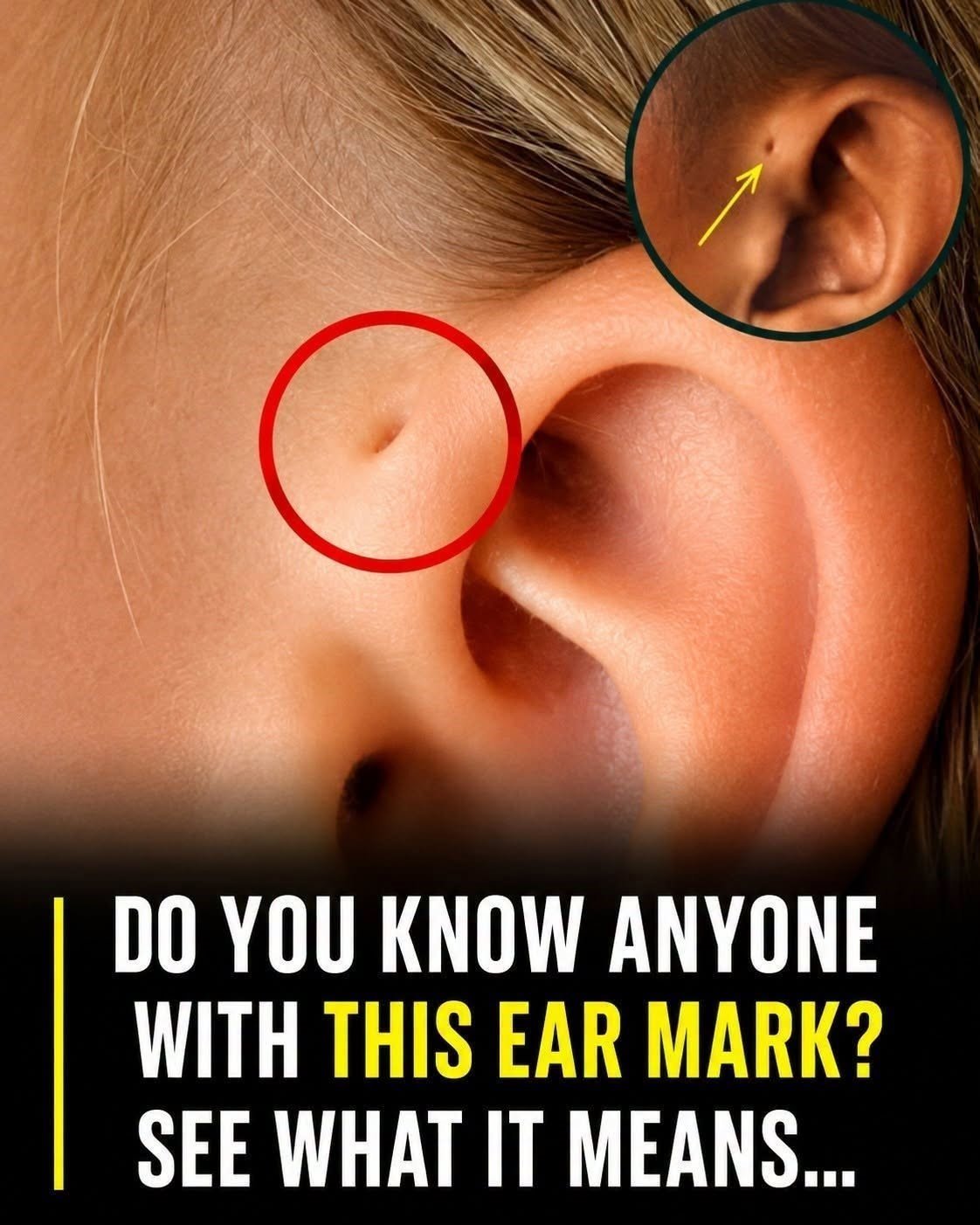
Have you ever noticed a tiny hole just above where someone’s ear meets their face? You might even have one yourself without realizing it.
It looks almost like a piercing, but there’s something surprisingly interesting about this little opening. Some people are actually born with it.
Doctors call it a preauricular pit, and although its appearance can seem unusual, it’s generally nothing to worry about.
But here’s what makes it fascinating: this tiny mark formed before you were even born, and under certain circumstances, it can cause problems that shouldn’t be ignored.
This small opening develops during the early stages of pregnancy, when the tissues responsible for forming the outer ear are coming together. If they don’t join completely, a tiny opening connected to a narrow tunnel beneath the skin can remain.
Interestingly, preauricular pits can run in families. Some people inherit them from a parent, while others develop them without any known family history.
They may appear beside one ear or both, although having a pit on just one side is more common.
For most people, this unusual little feature never causes trouble. It doesn’t normally affect hearing, interfere with daily activities, or require medical treatment. Some individuals live their entire lives without giving it a second thought.
However, there’s one important detail worth knowing.
Because the visible opening connects to a small passage beneath the skin, bacteria can occasionally become trapped inside. When this happens, an infection may develop, turning an otherwise harmless dimple into a painful problem.
The warning signs include redness, swelling, tenderness, unpleasant-smelling discharge, or pus coming from the opening. In more serious cases, an infected pocket called an abscess may form, sometimes accompanied by fever.
If you notice these symptoms, avoid squeezing the hole or attempting to drain it yourself. A healthcare professional can examine the area and determine whether antibiotics or another treatment is necessary.
When infections repeatedly return, doctors may recommend a minor surgical procedure to remove the entire underlying tract and reduce the likelihood of future problems.
There’s another lesser-known medical detail: although preauricular pits are usually harmless, they can occasionally occur alongside certain inherited conditions involving hearing or kidney development.
This doesn’t mean everyone with a tiny ear hole needs extensive testing. Doctors generally consider further evaluation when additional symptoms, unusual ear features, hearing difficulties, or relevant family history are present.
So, should you be concerned if you’ve had this little opening since childhood?
Usually, no. If it remains painless, clean, and unchanged, there’s generally nothing special you need to do. Simply maintain normal hygiene and avoid unnecessarily picking at the area.
However, persistent drainage, recurring swelling, or sudden pain deserves medical attention.
That tiny hole near your ear isn’t a mysterious piercing or evidence of something growing inside your body. It’s simply a small reminder of how intricately the human body develops before birth.
And now, if you happen to notice one in the mirror, you’ll know exactly why it’s there.
Mine is near my eye just by my nose